Chełm, Dubienka, Kamień, Ruda-Huta, Żmudź. Gmina sąsiaduje z Ukrainą.
Przypisy |
↑ abhttp://www.polskawliczbach.pl/gmina_Dorohusk, w oparciu o dane GUS.
↑Rejestr rezerwatów przyrody województwa lubelskiego, RDOŚ Lublin stan na 4 czerwca 2012. [dostęp 05-02-2014].
↑Portal Regionalny i Samorządowy REGIOset (pol.). regioset.pl. [dostęp 2010-09-14].
↑Baza Demograficzna – Tablice predefiniowane – Wyniki badań bieżących; Stan i struktura ludności; Ludność według płci i miast (pol.). GUS. [dostęp 2010-09-14].
gubernia lubelska (1867–1912) • gubernia chełmska* (1912–15) • woj. lubelskie (II RP) (1919–39) • woj. lubelskie (PRL) (1945–75)
Miasta
Chełm (do 1951 →) • Pawłów (do 1870) • Puchaczów (do 1870) • Rejowiec (do 1870) • Rejowiec Fabryczny (od 1962) • Sawin (do 1870) • Wojsławice (do 1870)
Osiedla (1954–72)
Rejowiec Fabryczny (1958–62)
Gminy wiejskie (1867–1954 i 1973–75)
Brzeziny (1868–1914 →) • Bukowa (do 1954) • Chełm (do 187?) • Chełm (od 1973) • Cyców (do 1930 i od 1973) • Dorohusk (do 187?) • Dorohusk (od 1973) • Krzywiczki (187?–1954) • Leśniowice (od 1973) • Liszno (do 1870) • Łańcuchów (do 1868) • Olchowiec (do 1954) • Pawłów (1870–1954) • Rakołupy (do 1954) • Rejowiec • Rejowiec Fabryczny (od 1973) • Ruda-Huta (od 1973) • Sawin (od 1973) • Siedliszcze • Staw (187?–1954) • Stołpie (do 187?) • Świerże (do 1954) • Turka (187?–1954) • Wierzbica (od 1973) • Wiszniewice (1930–54) • Wojsławice • Żmudź
25
5
Non-overlapping Matrix Sum Given k arrays of length n , output the maximum sum possible using one element from each array such that no two elements are from the same index. It is guaranteed that k<=n. Input A nonempty list of nonempty arrays of integers. Output An integer that represents the maximum sum. Examples Input -> Output [[1]] -> 1 [[1, 3], [1, 3]] -> 4 [[1, 4, 2], [5, 6, 1]] -> 9 [[-2, -21],[18, 2]] -> 0 [[1, 2, 3], [4, 5, 6], [7, 8, 9]] -> 15 [[1, 2, 3, 4], [5, 4, 3, 2], [6, 2, 7, 1]] -> 16 [[-2, -1], [-1, -2]] -> -2
code-golf array-manipulation
share | improve this question
edited Dec 18 at 15:36
...
1
I want to send a list of all folders including one level down to a txt file. Excluding some named folders and no files. Imagine a folder structure like this. CAPS are folders. FOLDER 1 .hidden TEMP somefile ========= ========= FOLDER 2 .hidden TEMP DATA1 DATA2 somefile ======== ======== FOLDER 3 .hidden TEMP DATA1 somefile I would like to run "insert magic command here" and end up with an output that looks like below FOLDER 1 FOLDER 2 DATA1 DATA2 FOLDER 3 DATA1
bash shell-script
share | improve this question
edited Dec 16 at 4:15
Rui F Ribeiro
...
up vote
28
down vote
favorite
5
Unfortunately one of the greatest comic book writers passed away yesterday afternoon. Lots of Hollywood stars, musicians, actors, and many other people are paying tribute to this awesome writer, so we must do something as well. Challenge Print The Avengers Logo In ASCII-art ###### ############### ##### ########## #### ####### #### ### #### ### ### ### #### ### ### ### #### ### ### ### #### ### ### ### #### ### ### ### #### ### ### ### ########### ### ### ########### ### ### #### ### ### ### ### ### ### #### #### #### ######## ###### ################# ### Optional Who...

 Polska
 lubelskie
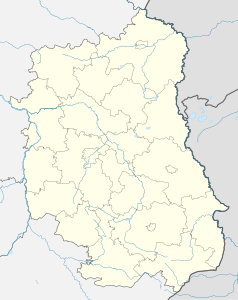

 51°10′N 23°48′E/51,162222 23,803333
 Polska